

Some careers look clean on paper: one job, one industry, one steady climb.
Jacqueline Cintron’s career has been something else—a series of disciplined pivots built on real responsibility, real people, and real consequences.
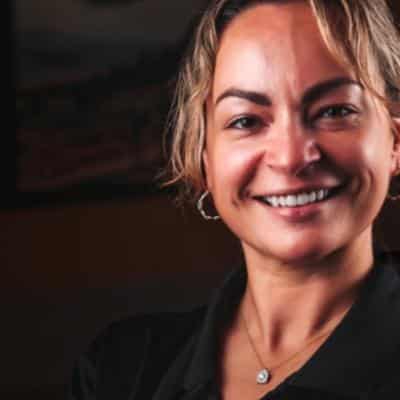
In this episode of Huntsville Biz Talk (brought to you by Nectar Bridge), host Gary Smith sits down with Jacqueline to unpack her path from joining the Air Force at 17, to serving 21 years in military medicine, to retiring young enough to build a second professional life—with the freedom to choose what she does and who she helps.
Wearing multiple hats—without losing the plot
Jacqueline talks about working in business development and community-facing roles that help growing businesses expand their relationships and visibility.
That “fractional” work model matters because it reflects something more people are doing now:
- building a portfolio career
- contributing to multiple organizations
- choosing flexibility while still taking responsibility seriously
And in Jacqueline’s case, it aligns with her natural skill set—being a connector, being present in the community, and helping the right people find each other.
The foundation: 21 years of Air Force medicine
Jacqueline joined the Air Force at 17 years old, dead set on working in the medical field.
Her early plan changed as the Air Force restructured roles, and she became what she calls a “traditional medic”—working ambulance runs, clinic care, and a wide range of responsibilities.
One of the more interesting points she makes is that the scope of practice in military medicine can be higher than civilians assume, and that reality demands a high level of discipline. You don’t get to “wing it.” You’re trained constantly. You’re inspected. You’re held to defined standards.
That pressure shaped how she thinks—and later, how she approaches business.
A scholarship that changed the trajectory
Jacqueline then earned a coveted scholarship: still on active duty, but sent to school full-time.
She completed her bachelor’s degree in nursing at a civilian institution—University of Missouri–St. Louis—and makes a point that surprises some people:
Military medical professionals aren’t trained in a hidden, separate system. They’re trained in the civilian world, then brought into a military environment that demands standardization, clarity, and accountability.
She eventually retired after 21 years, with the ability to retire at 38
Serving overseas: healthcare gets complicated fast
Jacqueline’s time stationed in Italy was a reminder that “beautiful assignment” doesn’t mean “simple logistics.”
When you’re overseas, even basic medical care can become more complex because:
- civilian coordination may be required for true emergencies
- language barriers add risk and stress
- higher-level care may be hours away
- patient fear is higher because the environment is unfamiliar
She shares a specific example from women’s health: for complications like preterm labor or high-risk pregnancy needs, patients sometimes couldn’t be supported locally. That meant ambulance transfers to another city—and in some cases, families being disrupted enough that they had to relocate or return stateside.
One of the most valuable themes in the episode is Jacqueline’s emphasis on scope.
In medicine, you are trained to operate inside clear boundaries—because stepping outside them can harm patients and expose you professionally.
That mindset translates cleanly into business:
- follow procedures
- use checklists
- stay in your lane
- don’t assume expertise you don’t have
- build systems that reduce avoidable mistakes
Gary adds a comparison that lands well: aviation is known for rigid procedures that reduce catastrophic outcomes, and healthcare has been moving steadily in the same direction. Jacqueline’s point is that boundaries exist for a reason—and in high-stakes environments, people get hurt when those boundaries are ignored.
A future lane she’s passionate about: legal nurse consulting
Jacqueline also talks about a role she’s trained for and deeply interested in: legal nurse consulting.
A strong legal nurse consultant can help identify:
- whether standard procedures were followed
- where documentation supports or contradicts claims
- whether follow-up care and plan-of-care steps were completed
- gaps that may matter in malpractice, insurance, or workers’ comp contexts
BNI and community: why relationships become an operating system
Toward the end of the episode, Jacqueline talks about something that’s become a meaningful part of her career: structured networking and community involvement.
For people unfamiliar with BNI, Gary gives a helpful plain-English explanation: it’s a weekly networking organization with local chapters where professionals learn each other’s businesses and actively help one another through referrals and connections.
The real through-line: responsibility plus relationships
Jacqueline’s story isn’t “I stay busy.”
It’s “I stay useful.”
Her career—from military medicine, to leadership and operational discipline, to business development and community presence, to the emerging interest in legal nurse consulting—keeps returning to the same idea:
Do the work. Respect the boundaries. Help people. Build something that lasts.
Want help getting your back office out of the weeds?
Nectar Bridge provides back-office support—including accounting, operations, and software solutions—so small business owners can stay focused on their vision instead of getting stuck in the weeds.
Schedule a call with Gary to talk through what’s messy right now and what “clean and under control” could look like.